What every lure type does — and when to tie one on
6 min read
A lure is a fake meal designed to trigger a predator. Each shape moves and sits in the water differently, which is why one box holds so many. Here is what the main families do and when each one earns its place on your line.
Topwater lures (worked on the surface)
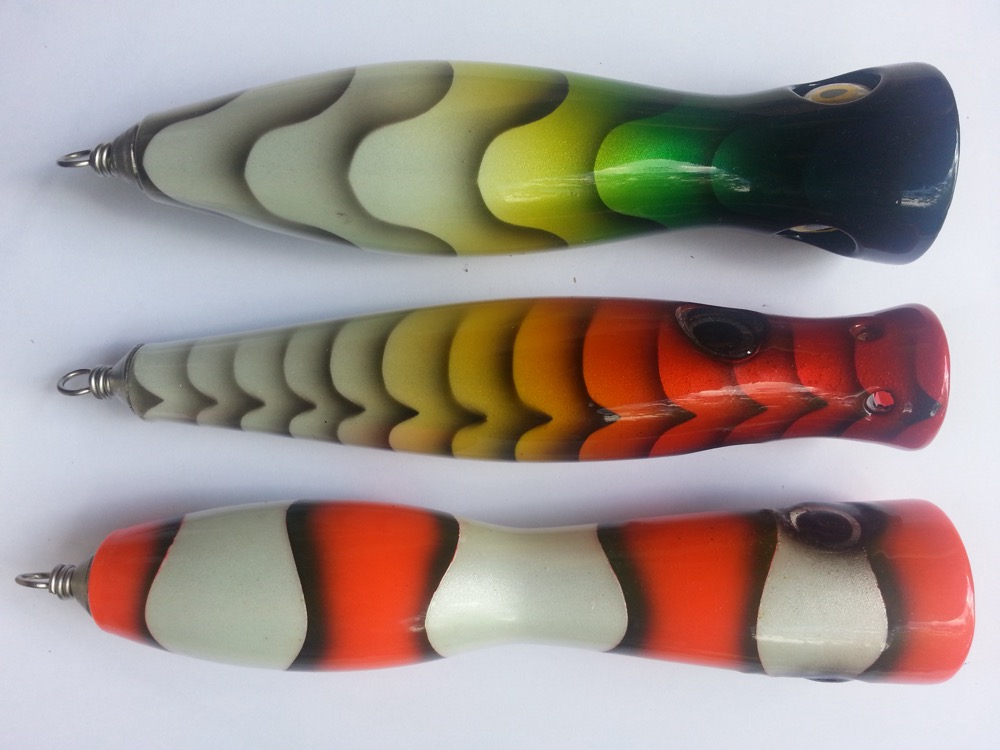
Photo: Stalane · CC BY-SA 3.0
These stay on top and draw explosive surface strikes. Best at dawn, dusk and over reef edges.
Popper
Cupped face that 'pops' and spits water when you jerk it. Loud and aggressive — deadly on Giant Trevally and surface-feeding tuna.
Stickbait
Long, pencil-shaped lure with no cup. Worked with a sweeping 'walk-the-dog' action that mimics a fleeing baitfish. Casts far, works big GT and queenfish.
Diving lures (subsurface)
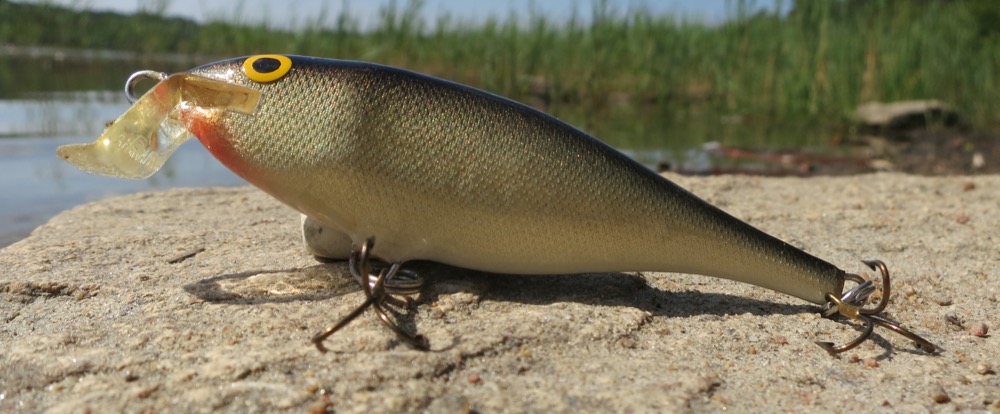
Photo: R. Henrik Nilsson · CC BY 4.0
These swim under the surface at a set depth thanks to a lip or their body shape.
Minnow / diving plug
Slim lip that makes the lure dive and wobble on a steady retrieve or troll. Great for barracuda, wahoo and trevally.
Crankbait
Fatter body with a hard wobble; dives to a depth set by lip size. More a freshwater/estuary tool around Egypt.
Metal jigs (sink and work vertically)
Photo: R. Henrik Nilsson · CC BY 4.0
Dense metal lures you drop down and work back up. The backbone of Red Sea deep-water fishing.
Knife / speed jig
Long and slim, sinks fast, ripped up quickly with hard pumps. Triggers reaction strikes from dogtooth tuna, amberjack and GT.
Slow-pitch jig
Wide, flat and balanced to flutter on the fall. Worked with slow, rhythmic lifts — superb for grouper and bottom fish.
Casting jig / spoon
Compact metal you cast and wind back fast over the surface or mid-water for bonito, mackerel and small tuna.
Soft plastics & jig heads
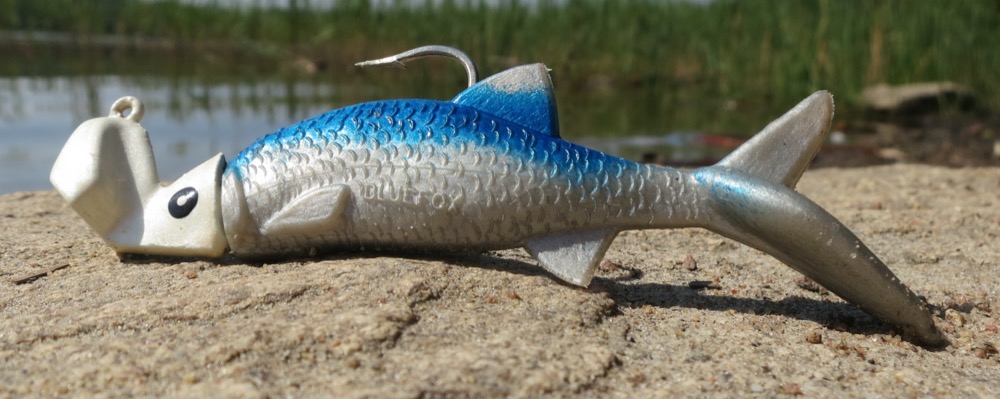
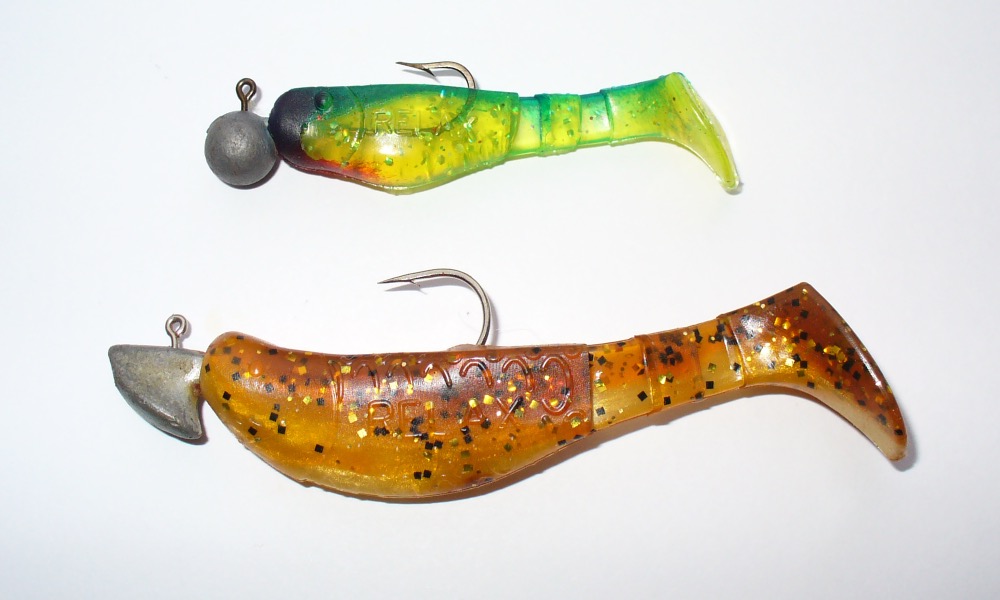
Photo: George Chernilevsky · Public domain
A soft rubber body threaded onto a weighted hook (jig head). Cheap, versatile and very effective.
Paddle-tail / shad
Tail thumps on a steady retrieve — imitates a swimming baitfish for trevally, grouper and snapper.
Jerk shad / fluke
Darts erratically when twitched. Good around structure and on the drop.
Jig head
The weighted hook the plastic sits on. Heavier head = deeper and faster sink. Match the weight to depth and current.
How to choose
•Match the size and colour to the baitfish the fish are eating.
•Topwater for low light over reef; metal jigs for deep structure; soft plastics for everything in between.
•Clear water and bright sun → natural silver, blue, sardine colours. Murky water or low light → dark, chartreuse, pink and gold.
•Heavier lures cast further and sink faster, but a lure that's too heavy looks unnatural — go as light as the conditions allow.
•If a steady retrieve gets ignored, add pauses and twitches. The pause and the fall trigger most strikes.